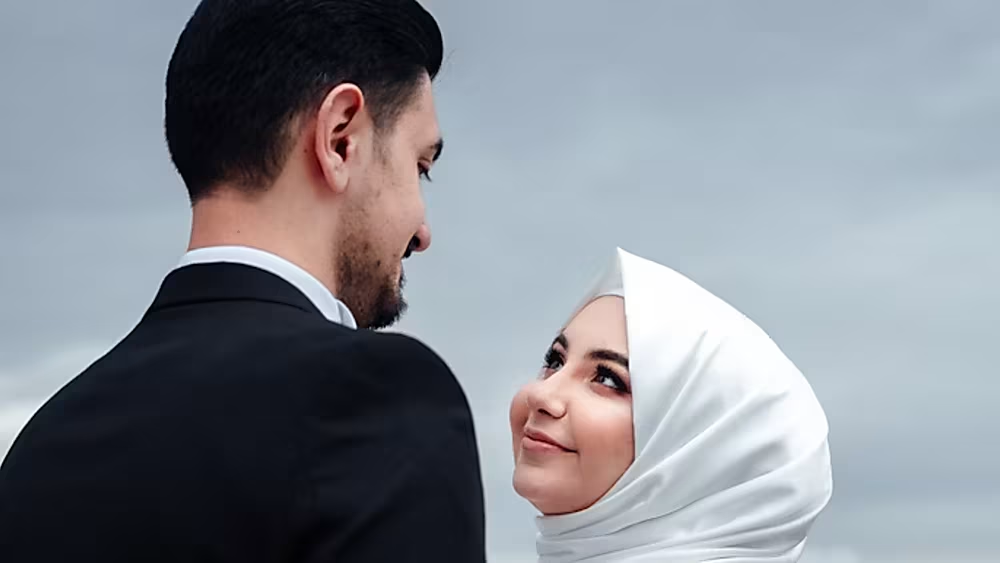
Marriage in Islam: A Sanctuary of Peace and Mercy
A faith-based guide to understanding marriage as a covenant of mercy—blending Islamic principles with practical counseling tools for harmony and growth.

Dr. Hassan Kinyua Omari
When couples sit in my office, often carrying the weight of unspoken hurts, I begin with a reminder from the Qur’an: marriage is meant to be a place of sakīnah (tranquility). It is supported by two pillars: mawaddah (deep affection) and rahmah (mercy).
Marriage is not a competition. It is a covenant—a sacred partnership to seek Allah’s pleasure together and to build a home grounded in dignity, trust, and mutual care.
In this article, we explore how the Islamic vision of marriage combines spiritual depth with practical wisdom, offering a roadmap for couples striving for peace.
The Purpose: More Than Companionship
In Islam, marriage is a divine institution. It is designed to be a refuge where both partners flourish.
- It offers tranquility, a safe harbor from the storms of the world.
- It is a partnership in faith, where you help one another grow closer to Allah.
- It is a guardian of dignity, protecting each other’s honor and boundaries.
“They are garments for you, and you are garments for them.” — Qur’an 2:187
This verse is profound. A garment covers faults, protects from the elements, and beautifies the wearer. That is what you are to each other.
Building the Covenant of Balance
Islam gives both spouses a clear framework of mutual rights, rooted in fairness. A marriage thrives when we move from "what are my rights?" to "what are my responsibilities?"
- Good Conduct (ḥusn al-muʿāsharah): Speak kindly. Even in disagreement, respect must never leave the room.
- Financial Integrity: Money can be a tool for bonding or a wedge of division. Transparency and shared goals are key.
- Consultation (shūrā): You are a team. Big decisions should be discussed with honesty and mutual respect.
Try this: Create a simple “House Charter”—three shared promises that define your home’s values. For example: “We never go to sleep angry,” “We pray together,” or “We speak with kindness.”
Communication That Heals
Healthy communication is the heartbeat of a peaceful marriage. Many disagreements are not about what happened, but how we talk about it.
- Use “I feel” instead of “You never.” The former invites empathy; the latter invites defense.
- One issue at a time. Don't bring up the past to win a fight in the present.
- Pause. When emotions run high, take a 20-minute break. Nothing productive happens when we are flooded with anger.
- Repair quickly. The best couples aren't the ones who never fight; they are the ones who repair the relationship quickly after a rupture.
“The best of you are those who are best to their spouses.” — Prophet Muhammad (SAW)
Facing Conflict with Mercy
Disagreement is natural. Hostility is a choice. In moments of tension, let mercy lead.
- Assume good intentions.
- Look for the unmet need behind the complaint. Is it a cry for connection? For respect?
- Avoid accusations. Focus on understanding the other's perspective.
If patterns repeat and you feel stuck, ask for mediation early. It is not a sign of failure; it is a sign of commitment.
Boundaries and Family
Marriage joins families, but the couple is a distinct unit.
- Present a united front. Deal with external opinions together.
- Keep secrets secret. Your marital struggles should not be public conversation.
- Honor parents, but do not allow interference to damage your bond.
Nurturing Love
Love in Islam is a verb. It is something you do. The Prophet ﷺ showed love through service, humor, and gentle words.
- Express affection daily. A text, a smile, a kind word.
- Put the phone away. Give your spouse your full attention.
- Prioritize intimacy. It strengthens the emotional connection and is a source of reward.
When to Seek Help
Islam forbids harm (lā ḍarar wa lā ḍirār). If there is abuse, addiction, or chronic breakdown, seeking professional help is an obligation. It is part of protecting the amanah (trust) of your life and soul.
My approach to counseling is faith-rooted and practical. We combine Islamic ethics with modern relationship science to help you uncover patterns, rebuild trust, and find your way back to sakīnah.
Marriage is a journey of mercy. It is not about finding a perfect person, but about learning to love an imperfect person perfectly.
May Allah place sakīnah, mawaddah, and rahmah in your home—always.
Beyond Tolerance: How Interfaith Dialogue Builds Peace in Kenya
Interfaith dialogue is more than talk—it is a tool for survival. Learn how Kenya is using structured dialogue to foster peace, ethical leadership, and understanding.
Class of 2025: A New Generation of Global Leaders
The KIFLAPS 2025 Graduation was a celebration of resilience, skill, and ambition. Meet the graduates who are ready to shape the future of Kenya and beyond.